Russian strikes claimed the lives of four people in Ukraine on December 8
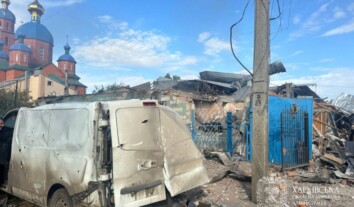
According to the National Police of Ukraine, Russian shelling on December 8, 2025, killed at least four civilians in the Donetsk and Kherson regions, while nearly 50 people sustained various injuries, including in the Dnipropetrovsk, Zaporizhzhia, Kharkiv, Chernihiv, and Sumy regions.
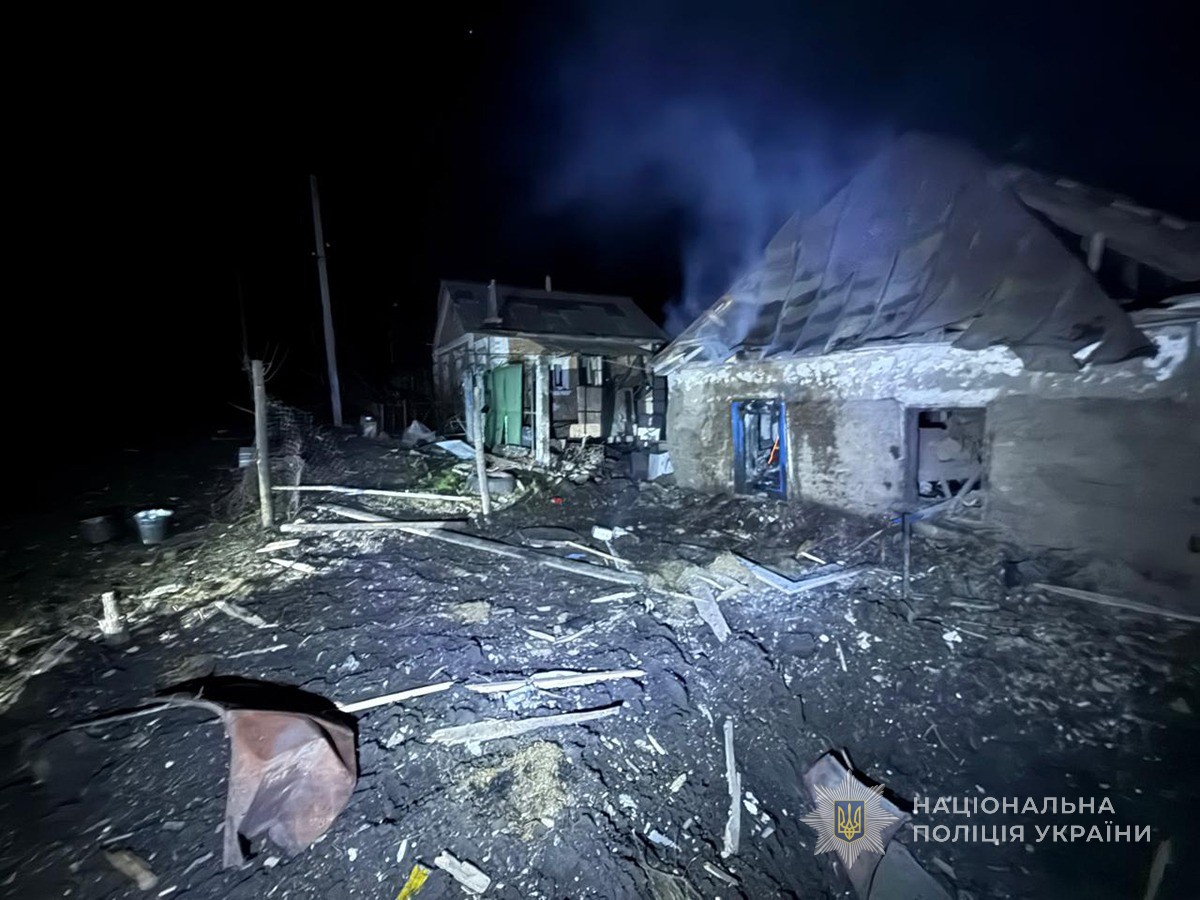 Houses in the Sumy region shelled by Russian forces
Victims of Russian shelling the day before included:
-
three residents of Druzhkivka and Kostiantynivka, who were targeted by drones, artillery, and bombs;
-
a man from Kherson, who was caught in a Russian artillery strike during the day.
In addition to the fatalities, 16 civilians were injured in the Donetsk region, including five in Druzhkivka and six in Kostiantynivka. In Kostiantynivka, the wounded include two children — a 13-year-old boy and a 7-year-old girl
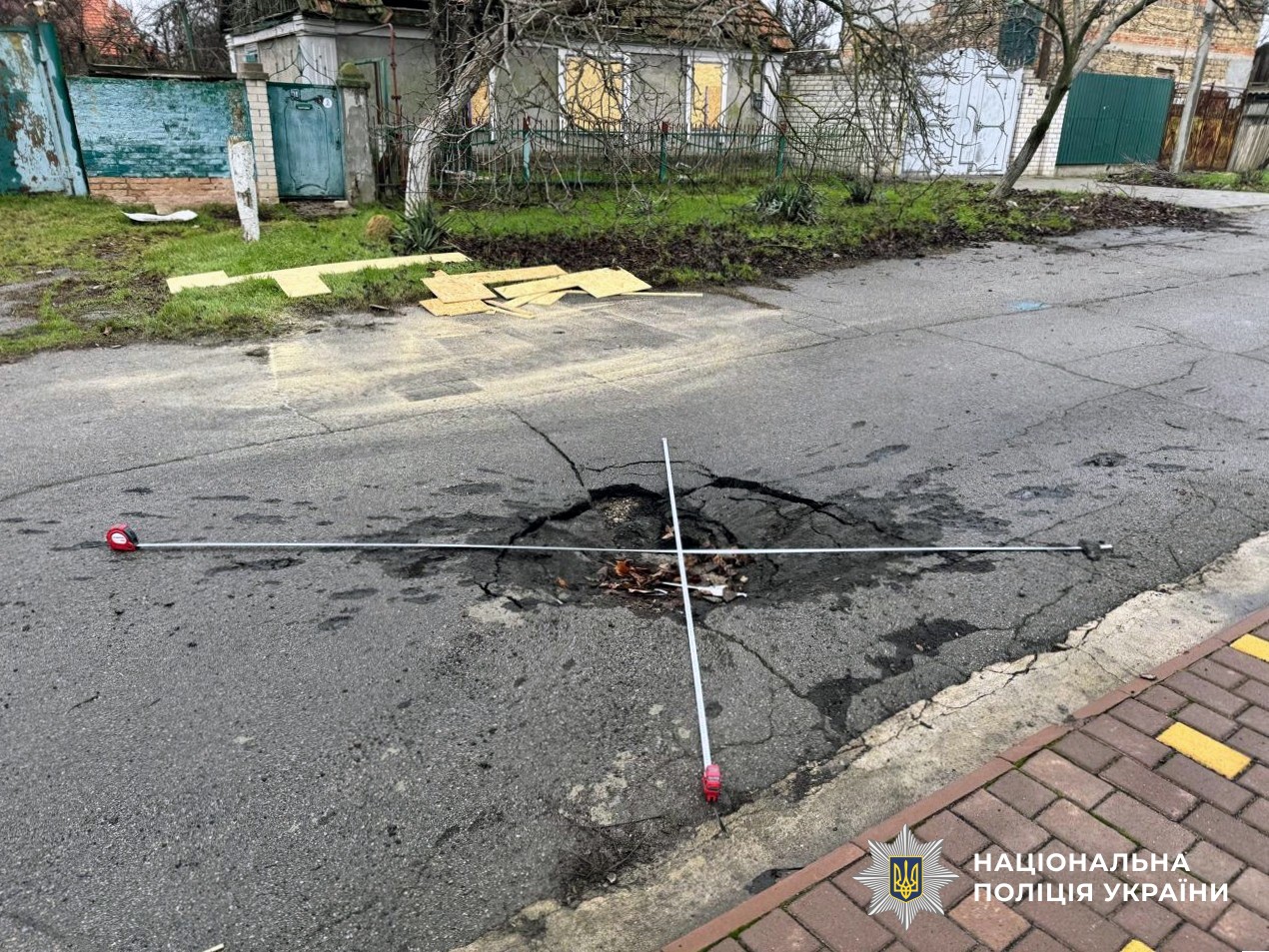 Traces of a hit from a Russian projectile or its fragments near private houses in the Kherson Oblast
In the Kherson Oblast, Russia wounded five more people, including Kherson residents, at different times during the day.
In addition to these recent casualties, the daily police report included victims and wounded from December 5 and 7:
- A civilian woman, killed by a Russian strike on Beryslav.
- A wounded female resident of Bilozerka.
- A deceased pensioner whose body was found near the bank of the Dnipro River in Kherson.
- A resident of Kachkarivka, injured after triggering a Russian mine.
In the Zaporizhzhia Oblast, Russia launched an airstrike on the regional center, injuring 16 people. The strikes targeted the city’s industrial zone and parts of the Zaporizhzhia District. In total, Russian forces launched more than 500 strikes on the region over the past day, using drones, artillery, guided aerial bombs, and multiple launch rocket systems (MLRS).
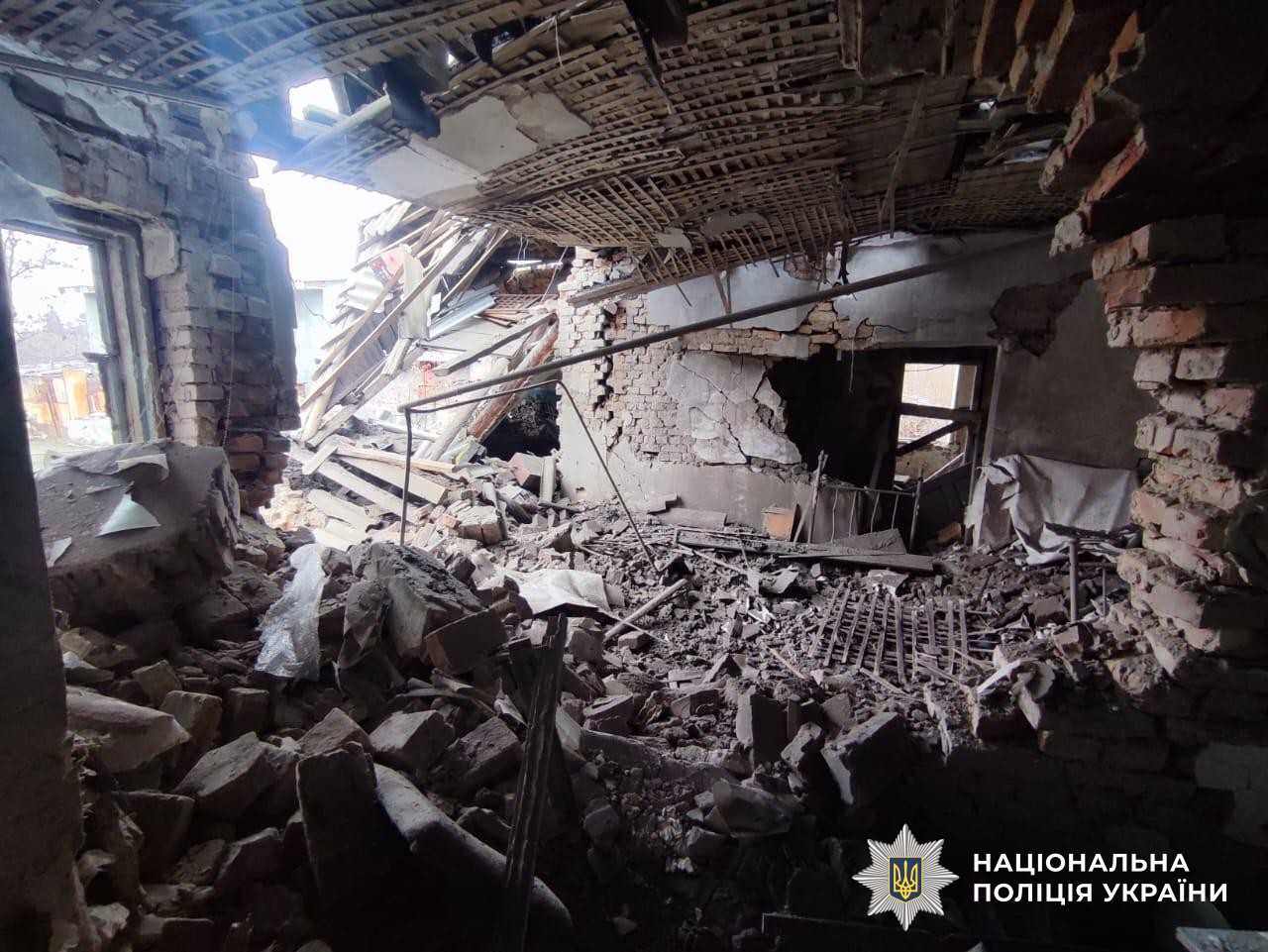
In the Kharkiv Oblast on December 8, Russians wounded three residents of the border settlements of Kurylivka and Kivsharivka. All the victims are elderly, ranging in age from 63 to 77 years old. The full-scale war continues to affect older Ukrainians differently from other citizens, and one likely reason may be widespread age discrimination in society.
Two people each were reported injured in the Dnipropetrovsk and Sumy regions.
-
In the former, Russian drone strikes wounded a 67-year-old man and a 61-year-old woman.
-
In the latter, a 40-year-old man and a 35-year-old woman were injured.
The Chernihiv Oblast was also under Russian attack on December 8; there were no casualties, but destruction was reported.
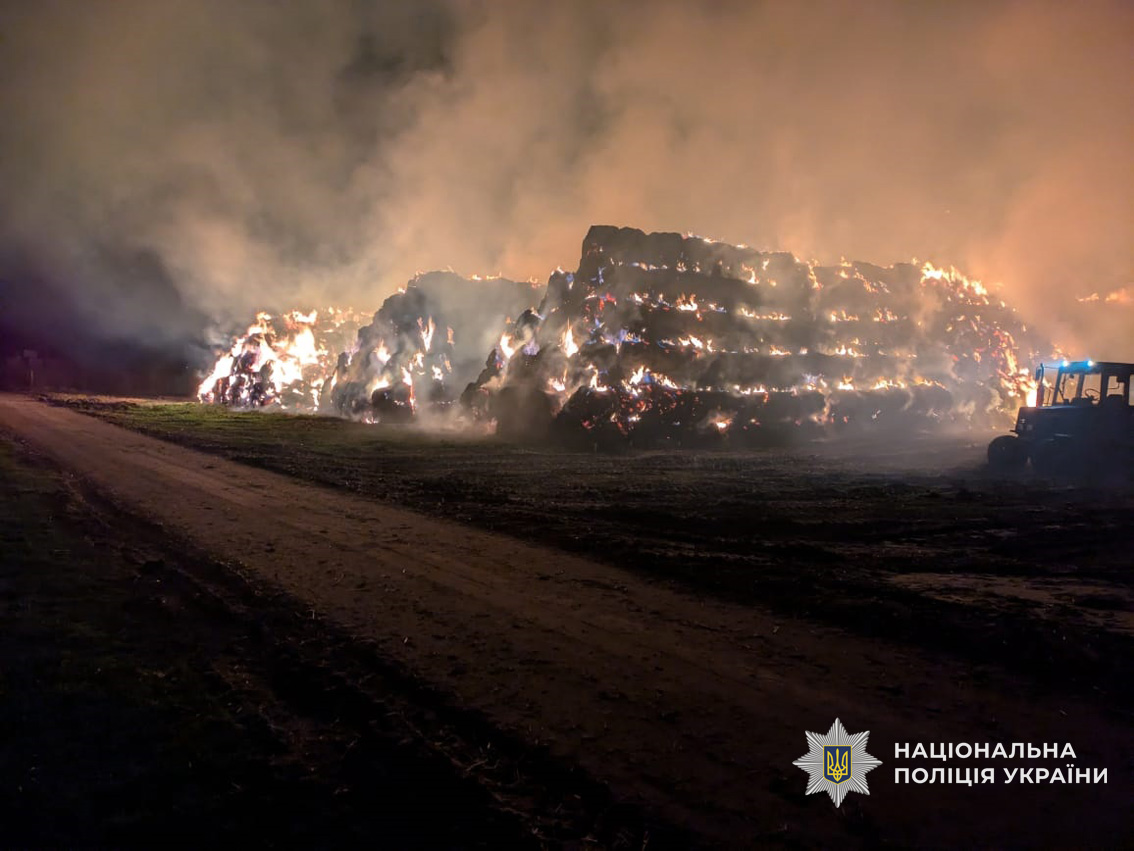 Hay burning after Russian shelling in the Chernihiv region, where a farm was hit
To provide background, on December 7, Russian military shelling killed ten people in the Donetsk, Kharkiv, and Dnipropetrovsk Oblasts and wounded dozens more.
Previously, Axios news outlet issued a publication, from which it is clear that Ukrainian President Volodymyr Zelenskyy is facing increasing pressure from the security guarantor under the Budapest Memorandum — the United States of America — to violate international law and the Constitution of Ukraine, ceding Ukrainian territories as part of a plan which U.S. President Donald Trump calls a “peace plan.”
An unnamed Ukrainian official told Axios that Kyiv believes the U.S. proposal worsened after Trump’s negotiators, Steve Witkoff and Jared Kushner, held a 5-hour meeting with Putin in the Kremlin last week.
You may also want to read: German political scientist and historian Andreas Umland warns of security risks for countries in Africa, South America, and Asia due to Russia’s war against Ukraine
According to Axios, Ukrainian President Volodymyr Zelenskyy is facing increasing pressure from the U.S., which is demanding that he agree to significant territorial and other concessions within the framework of U.S. leader Donald Trump’s “peace plan.”
President of Ukraine Volodymyr Zelenskyy, in an interview on December 8, confirmed that in negotiations regarding Trump’s “peace plan,” the participants, as before, cannot reach an agreement regarding the territorial issue, specifically concerning the fate of the Donetsk Oblast.
Volodymyr Zelensky has said that the idea of Ukraine conceding Donetsk Oblast as part of a so-called “peace deal” originated from Russia, not from US President Donald Trump’s team. He was asked by journalists whether he could confirm that the United States is demanding that Ukraine withdraw from the Donetsk Oblast without a fight as part of a potential “peace agreement”, as reported, in particular, by Axios.
“First of all – not the United States: the originator of this idea was Russia, that we should give up our territories. I have already answered this. Of course, we want America in this matter, in this context, to be on our side. Look, Russia will want us to give up our territories, and we will defend our interests,” he stated.
Zelenskyy may meet with U.S. President Donald Trump regarding the plan, as the U.S. side calls for an end to the war in the coming weeks.
When asked by journalists if a high-level meeting in the U.S. could be expected this week, the President replied that the Ukrainian side is “ready for any date” and that active groundwork for such a meeting will take place in the near future.
“We are ready to meet with European leaders and prepare our vision regarding this plan. From Europe, we expect a vision regarding their points – specifically those related to Ukraine’s future with Europe, frozen assets, and Ukraine’s EU membership. On other issues, we are ready with an answer,” he noted.
“I think there will be meetings with European colleagues, and there will be meetings at the level of national security advisors with the Americans. All this will happen this week, and we must do everything so that in the coming weeks, next week, or maybe the one after, we meet at the leaders’ level with the United States of America,” Zelenskyy said.
Zelenskyy also announced that within the framework of the negotiation process between Ukraine, Europe, and the U.S., three documents are being prepared that will form the basis of the peace settlement.
“We are working on this. I am awaiting relevant proposals from our military and their dialogue with American colleagues, and all of this must be combined, in principle, with the foundations of the Coalition of the Willing,” the Head of State added.
While en route from Italy, Zelenskyy declined to disclose whether Ukraine’s potential NATO membership is a point of disagreement between Ukraine and the U.S. within the framework of the “peace plan.” Instead, he emphasized that the key priority now is American security guarantees within a potential peace deal.
Zelenskyy was asked if the issue of Ukraine-NATO relations is among the points of contention between Ukraine and the U.S., and if there are signals that Russia is ready to agree to wording acceptable to Ukraine.
“Security guarantees are very important for Ukraine. We know that the United States of America is not yet, unfortunately, ready to see Ukraine in NATO. These aren’t games — it seems to me this is open information. But this is definitely a question for the future. For today, we are considering effective security guarantees,” the President of the Ukrainian State answered.
He continued that regarding European partners, these measures fall within the “Coalition of the Willing,” the details of which are generally clear to the Ukrainian side.
“But for us, it is very important, very important — bilateral security guarantees between Ukraine and the USA. They formulate it in the 20-point plan as ‘Article 5 Mirror,’ meaning the same as Article 5, which NATO has. We want to understand the details regarding this issue,” Zelenskyy said.
“In the coming days, weeks — I think, actually days — we will understand the details of these security guarantees. And, of course, they go together with other issues of ending the war. One cannot simply end it without understanding what the security guarantees will be,” he emphasized.
Meanwhile, Donald Trump said in an interview with Politico that Ukraine should hold a presidential election, as a considerable amount of time has passed since the previous vote.
“Yeah, I think it’s time. I think it’s an important time to hold an election. They’re using war not to hold an election, but, uh, I would think the Ukrainian people would … should have that choice. And maybe Zelenskyy would win.”
Trump added that the situation in Ukraine, in his opinion, allegedly “gets to a point where it’s not a democracy anymore.”
You may also want to read: Ukrainian civil society organisations explain why Ukraine can’t hold elections during martial law
Following Trump’s claims, the European Union reiterated that Volodymyr Zelenskyy is Ukraine’s democratically elected president and that the next presidential election should be held when conditions permit.
Anitta Hipper, Lead EU Spokesperson for Foreign Affairs and Security, reminded that the EU considers Zelenskyy the legitimate president and stressed that elections must take place when circumstances permit.
“We had already referred to this question as these are exceptional times… In my mind, President Zelenskyy is the democratically elected leader, and any election should take place when the conditions permit it to do so,” the European Pravda cited Hipper.
Olha Aivazovska, Chair of the Board at Civil Network OPORА, pointed out in her Facebook post that, judging by the new U.S. security strategy, Europe is not a democracy.
“Meanwhile, democracy in the Russian Federation — after so many actions to destroy anything that holds an opinion different from the Kremlin’s — deserves neither Donald Trump’s attention nor his concern. It is interesting that the U.S. President is concerned exclusively and solely with presidential elections, and not with all the others that have become overdue during this period (+ parliamentary and local). This clearly ties this statement to the negotiation track, rather than to any concern for Ukrainian democracy. Perhaps someone will find it interesting, but in Germany, the legislation is even more “optimistic” than the 100 days proposed to us in the 28 points regarding the legitimacy of elected bodies during wartime,” the head of the election watch civil society organization stated.
Article 115h
[Expiry of electoral terms and terms of office]
(1) Any electoral terms of the Bundestag or of Land [state] parliaments that are due to expire during a state of defence shall end six months after the termination of the state of defence. A term of office of the Federal President which is due to expire during a state of defence, and the exercise of his functions by the President of the Bundesrat in case of the premature vacancy of his office, shall end nine months after the termination of the state of defence. The term of office of a member of the Federal Constitutional Court which is due to expire during a state of defence shall end six months after the termination of the state of defence.
(2) Should the necessity arise for the Joint Committee to elect a new Federal Chancellor, it shall do so by the majority of its members; the Federal President shall propose a candidate to the Joint Committee. The Joint Committee can express its lack of confidence in the Federal Chancellor only by electing a successor by a two-thirds majority of its members.
(3) The Bundestag shall not be dissolved while a state of defence is in effect.