Russian strikes kill 3, injure 16 in Donetsk Oblast on December 8, including family of four
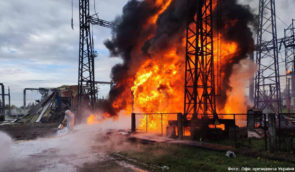
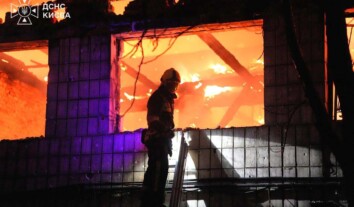
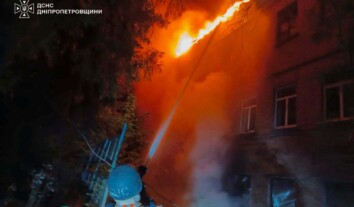
Russian forces killed three residents of Donetsk Oblast and injured 16 others on December 8, 2025, according to Vadym Filashkin, head of the Donetsk Oblast Military Administration and the Donetsk Oblast Prosecutor’s Office.
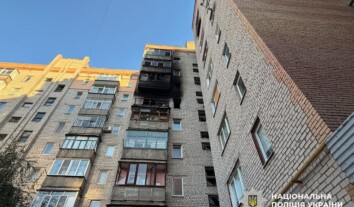
 Aftermath of the Russian strike on Kramatorsk city
Two civilians were killed and six were injured in Kostiantynivka, one person was killed, and five were injured in Druzhkivka, and one person was injured in Serhiivka due to Russian attacks. Four people were injured by a Russian aerial bomb in Kramatorsk.
The Donetsk Oblast Prosecutor’s Office reported that Russia had used a FAB-250 bomb equipped with a Unified Planning and Correction Module (UMPK) kit.
The munition hit near a two-story residential building. A 44-year-old man, his 40-year-old wife, and two children aged 6 and 8 suffered injuries. They were at home at the time of the attack.
Six apartment buildings were damaged in the city.
In addition, Filashkin stated that at least 3,761 civilians have been killed and a minimum of 8,565 have been injured in the Donetsk Oblast since the beginning of the Russian full-scale invasion. He noted that the total number of casualties does not include those from the cities of Mariupol and Volnovakha.
On the afternoon of December 8, Russia attacked a family with children collecting water in Kostiantynivka using an FPV drone. Four people were injured, including two minors.
Earlier, Euroactiv reported that Belgian Prime Minister Bart De Wever stated that the EU’s plan to use frozen Russian assets to finance Ukraine could have serious economic and geopolitical consequences. Ukraine repeatedly explained to its European partners that frozen Russian assets due to unprovoked Russian aggression belonged to Kyiv, including for the restoration of Ukraine.
“It would be unfair and dishonest to expect that while the benefits of such a scheme will be for everyone, the costs and risks will be borne by Belgium,” De Wever wrote, addressing European Commission President Ursula von der Leyen.
In the letter, the head of the Belgian government expressed surprise at what he called the “complete misunderstanding” by EU leaders of the legal and financial risks.
He noted that the European Commission has not yet presented any draft legal text, and the “options document” recently provided to the capitals does not take Belgium’s concerns into account.
The prime minister also wrote that the plan could encourage investors to sell EU bonds or withdraw funds from Euroclear and other European institutions, “exacerbating systemic risks” and potentially destabilizing the euro.
De Wever reiterated his conditions: EU countries must immediately and collectively provide liquidity to cover the amount held at Euroclear should sanctions against Moscow be lifted, share the burden of potential legal challenges, and other Western countries holding Russian assets must commit to similar arrangements. As an alternative, he called on EU countries to prioritize unspent funds from the current seven-year budget.
Previously, Politico, a Brussels-based politics and policy news organization, citing its sources, reported that Japan has rejected the European Union’s proposal to join its plan to use frozen Russian assets for the benefit of Ukraine.
Two EU diplomats familiar with the discussions told Politico that Japan had made it clear that it could not use the approximately $30 billion in frozen Russian assets held on its territory to provide Ukraine with a loan.
On December 3, European Commission President Ursula von der Leyen announced two proposals for funding Ukraine in 2026 and 2027, one of which would utilize proceeds from frozen Russian assets in the EU to provide Ukraine with a reparations loan. Even before the new proposal from the European Commission was made public, Belgian Foreign Minister Maxime Prévot said it was absolutely unacceptable.
Other EU countries are opposed to granting Belgium unlimited guarantees to release the loan for Ukraine.
On December 9, G7 finance ministers issued a statement indicating that they are prepared to consider confiscating all frozen Russian assets to help achieve a just and lasting peace in Ukraine.
“We will continue to work together to develop a wide range of financing options to support Ukraine, including potentially using the full value of the Russian Sovereign Assets immobilized in our jurisdictions until reparations are paid for by Russia, to end the war and ensure a just and lasting peace in Ukraine,” the statement reads.
The statement added that their actions are aligned with their “respective legal frameworks.”
The G7 ministers also said they support the Ukrainian authorities in implementing reforms, particularly in combating corruption and improving the governance of state-owned enterprises.
“We also stand ready to amplify the pressure on Russia should peace talks fail. We agreed on the importance of maintaining Ukraine at the top of the G7 agenda under France’s upcoming G7 presidency.”
According to media reports, the UK government is ready to transfer £8 billion (over $10.6 billion) in frozen Russian assets to support Ukraine.
Join our community on X and LinkedIn, and while you’re reading, let us know how we can serve you better – take our feedback survey here.