Russians kill at least 9 civilians, including 2 children, in strikes across 4 Ukrainian regions
Seven civilians were killed in Donetsk, Kherson, and Kharkiv oblasts due to Russian attacks on November 1, 2025, according to the Donetsk, Kherson, and Kharkiv oblast military administrations.

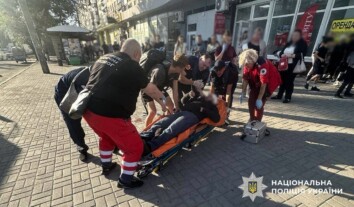
In the Donetsk oblast, five civilians were killed – two in Kostiantynivka and one each in the settlements of Rodynske, Myrnohrad, and Siversk. In addition, two people were injured in Kostiantynivka and Rodynske.
In Kherson Oblast, one person was killed and two were injured in Russian attacks. Local authorities reported that Russian forces struck critical and social infrastructure and residential areas, damaging four apartment blocks and 12 houses. Authorities evacuated six people from liberated hromadas – a local government area that includes one or more nearby settlements.
In Kharkiv Oblast, a 54-year-old man was killed in the village of Podoly in the Kurylivka hromada. A 39-year-old man was injured in an explosion of an unidentified object near the village of Kutuzivka in the Vilkhivka hromada.
Vladyslav Haivanenko, head of the Oblast Military Administration, reported that two children — boys aged 11 and 14– were killed during an enemy attack on the Samarivskyi District of the Dnipropetrovsk region on November 2.
President Volodymyr Zelenskyy stated that during the week of October 27 to November 22, the Russian army launched massive strikes on Ukraine, using nearly 1,500 attack drones, 1,170 guided aerial bombs (KABs), and more than 70 missiles.
By way of background, China, North Korea, Iran, and Brazil also assist Moscow in killing citizens of Ukraine in Russia’s war, including funding the Russian budget through trade.
Previously, the Ministry of Foreign Affairs announced that Ukraine would close its embassy in Cuba and downgrade ties over Havana’s complicity in Russian aggression.
Newly appointed Ukrainian Ambassador to the UN Andriy Melnyk stated in an interview with Suspilne broadcaster that Brazil paid Russia almost $10 billion for 6.5 million tons of diesel.
Over the last three and a half years, China has become a critically important partner for the Russian Federation. While Beijing officially declares its neutrality, Western intelligence and analytical studies indicate otherwise. China does not supply weapons directly to Russia but provides critically important components, including machine tools, microelectronics, special chemicals, optics, gunpowder, and ammunition components.
In 2024, then-U.S. Secretary of State Antony Blinken stated that 70% of machine tools and 90% of all microelectronics are sourced from China, which then flow into Russia.
Furthermore, according to recent NATO intelligence data, 80% of all Russian drones consist of Chinese parts.
According to The Telegraph newspaper, Chinese firms supplied sanctioned Russian companies with at least £47 million ($57.4 million USD) worth of parts between 2023 and 2024. Almost a quarter of the value of these supplies went to firms that produce Shahed-type drones.
Moreover, the Foreign Intelligence Service of Ukraine stated that China is also providing intelligence to Russia. The Kremlin used this data to prepare missile strikes, particularly against objects belonging to foreign investors, though the specific targets were not clarified. China denies these accusations.
Following the imposition of Western sanctions, Beijing has become a key supplier to Russia of cars, clothing, raw materials, and a range of other goods. In 2023, Russia-China trade turnover set a historic record, exceeding $240 billion, which is more than 60% higher than before Russia’s invasion of Ukraine, according to Chinese customs data.
Reuters also reported that China is buying oil and gas from Russia. The average daily volume of oil is more than 2 million barrels per day. During Vladimir Putin’s visit to Beijing, the countries signed a document for the supply of 106 billion cubic meters of gas per year to China.
Ukraine urges the international community to unite to restore global security under the UN Charter and strengthen sanctions against Russia to enforce compliance with international law. Following Russia’s initial invasion in 2014, Ukraine has pursued the liberation of its territories within its internationally recognized 1991 borders while developing comprehensive reintegration strategies and policies for all liberated areas.