Ukraine closes Cuba embassy and downgrades ties over Havana’s complicity in Russian aggression
Ukraine’s Foreign Minister Andrii Sybiha stated on X (former Twitter) that Ukraine will close its embassy in Havana in 2025 and downgrade its diplomatic relations with Cuba.

Sybiha reported that Ukraine voted against the United Nations General Assembly resolution “Necessity of ending the economic, commercial and financial embargo imposed by the United States of America against Cuba,” adding that this step has serious grounds.
We remember Cuban President’s wish of “success” to Putin in his war of aggression against Ukraine. We heard it well. This year, we decided to close our embassy in Havana and downgrade our diplomatic ties. Our vote is not against the Cuban people — we respect their right to live in prosperity,” the Minister stated.
Sybiha added that thousands of Cubans have signed contracts, swelling the ranks of soldiers directly involved in combat on Ukrainian soil.
“The unwillingness of Havana to stop massive deployment of its nationals in the Russian war against Ukraine constitutes complicity in aggression and must be condemned in the strongest terms,” Sybiha said.
Ukraine urges the international community to unite to restore global security under the UN Charter and strengthen sanctions against Russia to enforce compliance with international law. Following Russia’s initial invasion in 2014, Ukraine has pursued the liberation of its territories within its internationally recognized 1991 borders while developing comprehensive reintegration strategies and policies for all liberated areas.
The diplomatic rupture with Cuba highlights a wider issue: Russia continues to secure vital financing and dual-use technology for its military-industrial complex via third parties. While Ukraine sanctions overt Russian allies’ businesses, analysts of the Trap Aggressor media project have exposed complex international schemes facilitating this evasion. Hong Kong has emerged as a crucial jurisdiction. Its favorable regulatory environment and location allow shell companies, often founded by European nationals, to bypass restrictions and funnel sanctioned goods to Russia.
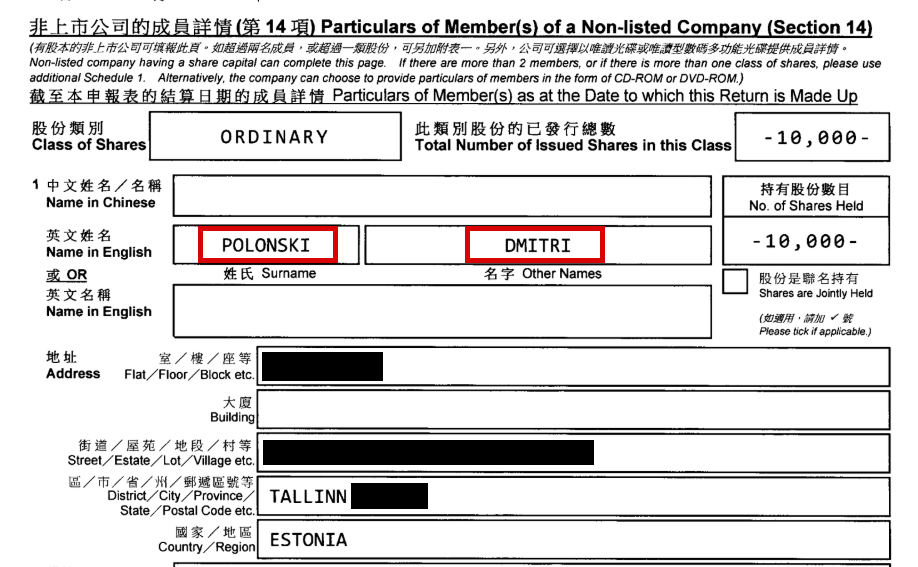
This sanctions evasion “conveyor belt” supplies critical Western and Asian components used in Russian weaponry. For instance, in November 2024, the Hong Kong firm Gustave HK Limited, founded by Estonian Dmitri Polonski, supplied over $180,000 worth of Taiwanese Adlink processors — critical components for missiles and armored vehicles — to Russia. These operations use tactics like shell companies, fictional addresses, and proxy services to conceal the final recipient, which is ultimately the Russian military-industrial complex. This demonstrates that, despite global sanctions, Russia’s war machine is sustained by a network of cynical entrepreneurs exploiting international financial hubs.
As is known, China, North Korea, Iran, Cuba, and Brazil also assist Moscow in killing citizens of Ukraine in Russia’s war, including funding the Russian budget through trade.
Newly appointed Ukrainian Ambassador to the UN Andriy Melnyk stated in an interview with Suspilne broadcaster that Russia exports diesel to Brazil, valued at approximately $10 billion annually.
Meanwhile, European intelligence sources reported to CNN that Iran appears to be stepping up the rebuilding of its ballistic missile program, despite the reintroduction last month of United Nations sanctions that ban arms sales to the country and ballistic missile activity. Intelligence sources said that several shipments of sodium perchlorate, the main precursor in the production of the solid propellant that powers Iran’s mid-range conventional missiles, have arrived from China to the Iranian port of Bandar Abbas.