Among civilians released in the “1000 for 1000” exchange, one political prisoner, 15 inmates, and the remaining were Ukrainians who had already served their sentences in Russia
Among the civilians released between May 23 and 25 during the “1000 for 1000” swap, there was one political prisoner and 15 inmates. The rest were Ukrainians who had already finished sentences in Russia for crimes committed under Russian law, as reported by the Kharkiv Human Rights Protection Group (KHRG).
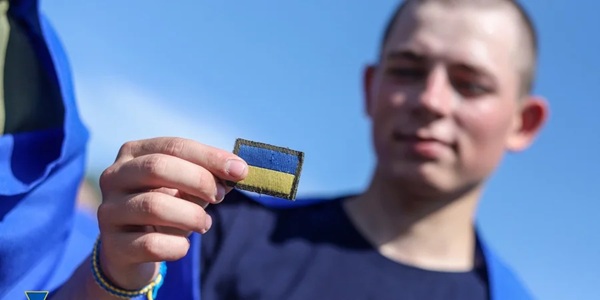 Photo: SBU / ssu.gov.ua
Human rights advocates reiterated that returning civilian captives is the most challenging task. From March 2022 to May 23, 2025, only 173 Ukrainian civilians were successfully returned through various exchanges.
“The increase of this number by 120 individuals at once appears to be a significant step in resolving the issue of the Kremlin’s civilian captives. So, who was returned?” the KHRG statement said.
According to Yevhen Zakharov, director of KHRG, 120 people who were convicted of crimes against Ukraine’s national security travelled from Ukraine to Russia during the large exchange. He noted that one would naturally expect Ukrainian civilians, tried for political motives and convicted for pro-Ukrainian stances, etc., to be returned from Russia to Ukraine, but this was not the case.
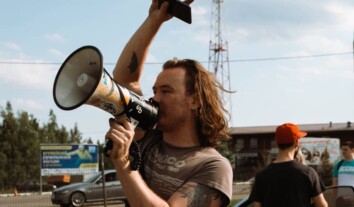
According to KHRG’s information, among the 120 people Russia handed over to Ukraine, only one was a political prisoner: Pavlo Zozuliuk, a paintball coach from Kakhovka.
As journalists of the Media Initiative for Human Rights reported, the occupiers first abducted him on October 10, 2022, on suspicion of collaborating with the Ukrainian territorial defence. He was held for 12 days in a police station on Melitopolska Street before being released.
Zozuliuk was detained a second time on July 27, 2023. During a search, “Right Sector”і propaganda leaflets and a traumatic pistol were allegedly found. A month after his actual abduction, a staged film about the “detention of an extremist” was produced, featuring a “confession” extracted under torture.
Until mid-October, relatives knew nothing about his fate until he sent a letter from Chonhar, where he was held in a pre-trial detention centre. It turned out that the occupiers had opened a criminal case against Zozuliuk for his alleged participation in “Right Sector” activities between 2014 and 2016.
In July 2024, propaganda media reported that the Ukrainian man was sentenced to two years in a general regime penal colony.
Zakharov clarified that Zozuliuk had effectively served his sentence and should have been released, but Russia did not let him go, and he could only be returned through an exchange.
Another 15 inmates who were returned were Ukrainians who had committed crimes and were convicted in Ukraine before 2022. Their custodial settings ended up under occupation, and they were deported to Russia. Such deportation, like any forced displacement of a population from an occupied area, violates international law, specifically the 1949 Geneva Convention Relative to the Protection of Civilian Persons in Time of War.
This is not the only crime committed by the Russian state in this instance, as individuals are held in horrific conditions during transfers, often without access to legal or medical aid, and are forced to take Russian citizenship. When their prison terms expired, it became extremely difficult for deported inmates to return home. Human rights advocates, including the non-governmental organization “Protection for Prisoners of Ukraine,” assist them in getting home.
On May 23, 15 such deported inmates were returned to Ukraine. Their time spent in Russia was credited towards their sentences in Ukraine. Hanna Skrypka, a legal advisor for the NGO “Prisoners’ Protection of Ukraine,” clarified that three of them went to pre-trial detention centres after the exchange to continue serving their sentences, while the rest are free.
According to KHRG, all the other 104 exchanged civilians were Ukrainians who had served sentences in Russian prisons for criminal offences committed in Russia. Their sentences had ended, and they were transferred to deportation centres. They had no means to return independently.
“Many of my colleagues expressed disappointment; they expected that during the exchange, the Russians would release political prisoners who are held with military prisoners and subjected to torture, etc. I understand them, I also want these people to be returned, but generally, I must say that all Ukrainians in Russia should be returned, regardless of who they are or how they ended up there,” Zakharov said.
However, Oleh Tsvily, Head of the NGO “Protection for Prisoners of Ukraine,” asserts that stating “The rest are Ukrainians who once committed crimes in Russia and have already served their sentences there” is not entirely accurate.
“I personally know about 40 such people, and among them, I saw a man whom the occupiers convicted after 2022 for helping Ukraine… 40 + 15 are former prisoners, and who the rest are needs to be clarified,” he wrote in a comment under KHRG’s Facebook post.
According to Skrypka, among the civilians returned from Russia, many are victims of human trafficking. Ukrainians seemingly travelled legally to Russia to earn money, as cooks, sales managers, or builders, and ended up enslaved by criminals. Their documents and mobile phones were confiscated, replaced with phones that could be used to track them, and they were forced to become drug couriers. If anyone tried to resist, they were “handed over” to Russian security forces.
Skrypka emphasised that most of the inmates who returned home as part of the latest exchange require state assistance. While “Prisoners’ Protection of Ukraine” is caring for 15 deported inmates from the occupation, it cannot support hundreds of returned prisoners from Russia.
According to Zakharov, they are currently in the hospital, without funds, and awaiting assistance from volunteers.
“They are fed in the hospital, but people still need at least minimal funds, even for socks, basic clothes, cigarettes. Soldiers receive salaries as military personnel. Most of them have families and housing. But what are civilians to do without state assistance, whose homes and families remained under occupation? They simply have nowhere to go, no place to live, and no means to do so,” Zakharov said.
According to the legal advisor of the NGO “Prisoners’ Protection of Ukraine,” these people have already started being discharged from the hospital with nowhere to go. They have no money or documents confirming they were in captivity or that they were exchanged.
Human rights advocates reported that during the exchange, all exchanged individuals received two forms to fill out – from the National Information Bureau and the Ministry of Community Development. State representatives promised to visit the hospital and assist with filling out these documents. However, according to them, no one came.
By way of background, as part of the latest “1000 for 1000” exchange, which took place between May 23 and 25, 2025, Ukraine managed to return 6,257 Ukrainians from Russian captivity: 5,757 through exchanges and 500 outside of exchanges.
According to “Suspilne,” the return of special forces from the 12th “Azov” brigade and civilians who have been in captivity since 2014 was unsuccessful due to Russia’s stance, stated Andriy Yusov, Deputy Head of the Coordination Headquarters for the Treatment of Prisoners of War.
He added that during the “1000 for 1000” exchange, the parties exchanged lists of prisoners of war, but the Russian side determined who was returned to Ukraine.
At the same time, Yusov noted that Russia ignores or refuses requests to exchange Ukrainians captured since the very beginning of Russian aggression in 2014. They justify this by stating that these individuals “are not prisoners of war and cannot be returned as part of an exchange.”
“That is, there are many refusals, but the fact remains. This is a violation of international humanitarian law; these are further crimes against humanity. Everyone must return home,” the deputy head of the Coordination Headquarters explained.
Earlier, ZMINA reported that not a single Crimean Tatar political prisoner was returned home during the “1000 for 1000” exchange, which took place between May 23 and 25 of this year.
Journalist and writer, former Kremlin captive Stanislav Aseiev, also stated that none of the civilians who have been in Russian captivity for eight years have yet been exchanged.